


Reading
Students study a wide range of fiction and non-fiction texts, including novels (such as Ghost Boys, Of Mice and Men and Great Expectations), poetry, plays (such as Face, Macbeth, and a range of Shakespearean monologues) and modern media. They learn how to understand increasingly challenging texts, explore key themes and ideas, and analyse how writers use language, structure and form to create meaning. Reading widely also helps students build vocabulary and develop an understanding of different cultures, viewpoints and experiences.
Writing
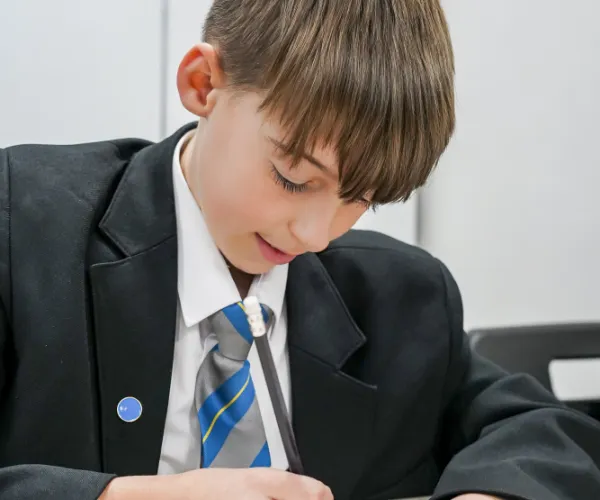
Students learn how to write clearly, accurately and effectively for different purposes and audiences. They practise a range of forms such as narrative writing, persuasive pieces, explanations and analytical essays. Alongside this, they develop their understanding of grammar, punctuation and spelling so they can communicate their ideas with clarity and confidence.
Speaking and Listening
Students develop their speaking and listening skills through discussion, presentations and debates. They learn how to express their ideas clearly, respond thoughtfully to the opinions of others, and build confidence when speaking in front of an audience. These activities help students become effective communicators who can share and evaluate ideas respectfully.