KS4 Core Physical Education
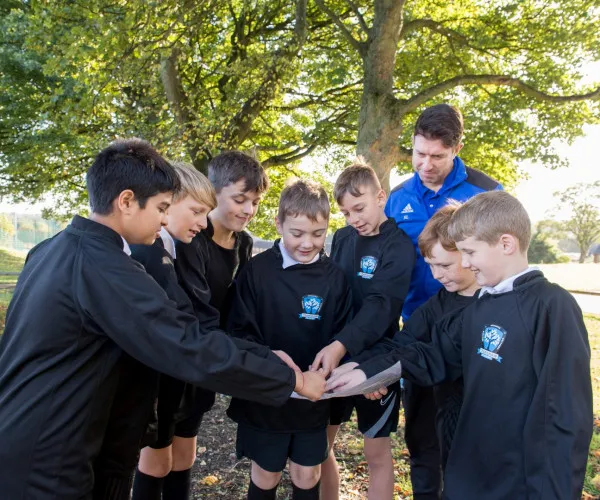
Year 10: Students receive 3 hours of Physical Education per fortnight (equivalent 1 ½ hours per week). Our aim in Year 10 is for students to be ‘Independently Active’ embedding active healthy living routines into their lives.
Year 11: Students receive 1 hour of PE per week. Our aim is for students to be ‘Active Role Models’ mastering concepts to flourish in life.
To enhance engagement and relevance, we use Sport England's 'under the skin' research to shape a Personality PE Pathway. This approach embraces best practice in understanding what keeps students interested and motivated in PE, Sport and Physical Activity. By personalising the PE experience to suit different personalities, preferences and motivations, we aim to:
- Foster enjoyment and long term participation.
- Promote positive physical and mental health.
- Encourage student voice and autonomy.
- Support students to develop the skills, knowledge and values needed to lead an active lifestyle.
GCSE Physical Education
GCSE Physical Education is a theory qualification which has an element of practical performance included within the syllabus. The majority of learning will be in the classroom with students gaining knowledge about various different aspects of sport, health and exercise. Although there will be practical lessons, it is important to stress that this qualification is not just an extension of core PE, and by its very nature it is an academic subject. An interest in all aspects of sport will certainly be beneficial for somebody considering this option.
The course will cover:
- Fitness and Body Systems (Theory) - Applied anatomy and physiology, movement analysis and physical training
- Health and Performance (Theory) - Health, fitness and well-being, sport psychology and sociocultural influences
- Practical Performance (Practical) - Assessed on 3 physical activities from a set list. One must be a team sport, one must be an individual sport. Final sport could be either
- Personal Exercise Programme (Practical) - Set out the aims of the PEP, plan the PEP, carry out the PEP and monitor then evaluate the PEP.
Assessment Theoretical Component: 60% of grade. Students will be assessed via 2 written papers. Paper 1 is worth 36% (1 hour 30 min) and paper 2 is worth 24% (1 hour 15 min). Questions are a combination of multiple choice, short answer questions and longer essay style questions.
Practical Component: 40% of grade. The 3 sports chosen will be internally assessed and then externally moderated. Each sport will be assessed on the candidate’s ability to perform specific skills (1-10) and the candidate’s ability to be influential in their sport in a competitive situation (1-25). 35 marks will be available for each sport.
Practical performance is worth 30% of the final grade. The Personal Exercise Programme is an individual 6 week training programme carried out by the candidate. The PEP is internally marked and externally moderated. The PEP is worth 10% of the final grade.
OCR Cambridge National Sport Studies
OCR Cambridge National Sport Studies is a vocational qualification that combines both theoretical and practical learning. It is designed for students who have an interest in sport and wish to develop their understanding of how sport impacts individuals and society, while also gaining valuable leadership and practical skills. Students will explore contemporary issues in sport, develop their ability to lead sporting activities, and gain experience of completing practical coursework. This qualification provides an excellent foundation for further study in sport, physical education and related career pathways. [ocr.org.uk]
The course will cover:
- Contemporary Issues in Sport (Exam Unit) – Participation in sport, values promoted through sport, the impact of major sporting events, media influences, issues such as performance-enhancing drugs and the role of national governing bodies.
- Performance and Leadership in Sports Activities (Coursework Unit) – Students develop their practical abilities in sport and learn how to plan, deliver and evaluate sports leadership sessions.
- Sport and the Media (Coursework Unit) – Students investigate the relationship between sport and the media, including how media coverage influences participation, sponsorship and commercialisation.
Assessment
The qualification is assessed through a combination of examination and coursework. Students complete one examined unit and two coursework units throughout the course.
Examined Component: 40% of the final grade
Students sit a written examination for Contemporary Issues in Sport. The exam assesses students' understanding of key sporting issues, participation trends, values in sport and the impact of wider influences on sporting participation and performance.
Coursework Components: 60% of the final grade
Students complete two internally assessed units which are externally moderated by OCR:
- Performance and Leadership in Sports Activities – Demonstrating practical sporting skills and effective leadership in a sporting context.
- Sport and the Media – Completing research and applied tasks exploring how media influences sport and sporting organisations.
This qualification is ideal for students who enjoy sport and wish to develop practical, organisational and leadership skills while gaining a nationally recognised qualification that supports progression to Level 3 Sport courses, apprenticeships and careers within the sport and leisure industry.