We Value Your Privacy
We use cookies to enhance your browsing experience, serve personalised ads or content, and analyse our traffic. By clicking 'Allow All', you consent to our use of cookies. For further details, please see our cookies policy.
We use cookies to enhance your browsing experience, serve personalised ads or content, and analyse our traffic. By clicking 'Allow All', you consent to our use of cookies. For further details, please see our cookies policy.
View navigation
For Parents/Carers
What is bullying?
Bullying is the repetitive, intentional hurting of one person or group by another person or group, where the relationship involves an imbalance of power. It can happen face to face or online.
There are four key elements to this definition:
Bullying behaviour can be:
What is NOT bullying?
Conflict is a part of life, it occurs in families, friendships, school, work, and in our society in general.
Adolescence is the phase of life between childhood and adulthood, from ages 10 to 19. It is a unique stage of human development.
Friendships are incredibly important during adolescence. Teen friendships help young people feel a sense of acceptance and belonging. They support the development of compassion, caring, and empathy, and they are a big part of forming a sense of identity outside the family.
Moreover, adolescent friendships can be incredibly supportive in helping teens to weather difficult times.
However, part of this phase will bring conflict amongst peers, fallout, arguments and disagreements. Some friends will drift apart whilst others will become stronger.
Conflicts can be seen by parents as bullying – but this is part of growing up. Encouraging good conflict resolution skills to young people will have a beneficial impact.
The skills can help your child to establish healthy relationships, prevent youth violence, set them up for good employment opportunities, and generally be more successful in life.
How can I help my child if they are being bullied?
If your child is being bullied, don’t panic. Your key role is listening, calming and providing reassurance that the situation can get better when action is taken.
How can school help?
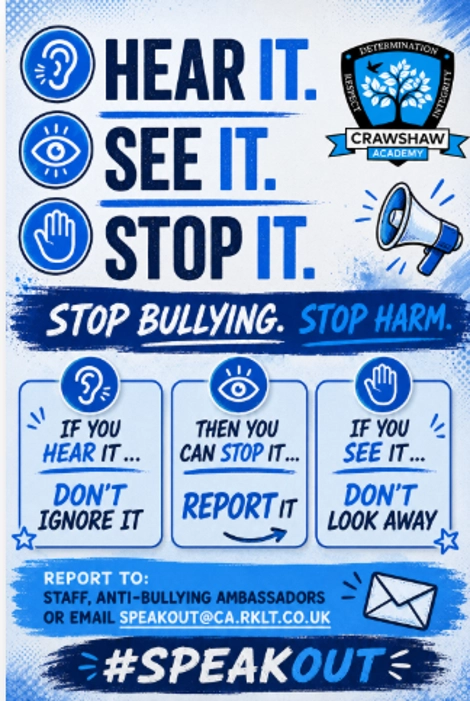
Please click here to email the above - #speakout